



Labradorite: Meaning, Cleansing and Care

The KUSHA Atlas of stones
Labradorite meaning, cleansing and care
Grey stone hiding a flash of blue
- Insight that arrives gently
- Creative vision
- Times of change
- Chakras
- Third Eye and Crown
- Element
- Air
- Planets
- Uranus and Neptune
- Energy
- Cool
- Tier
- Steady
- Material
- Feldspar (labradorite)
- Hardness
- 6 to 6.5 on the Mohs scale
- Sold as
- Natural
Meaning
Labradorite meaning
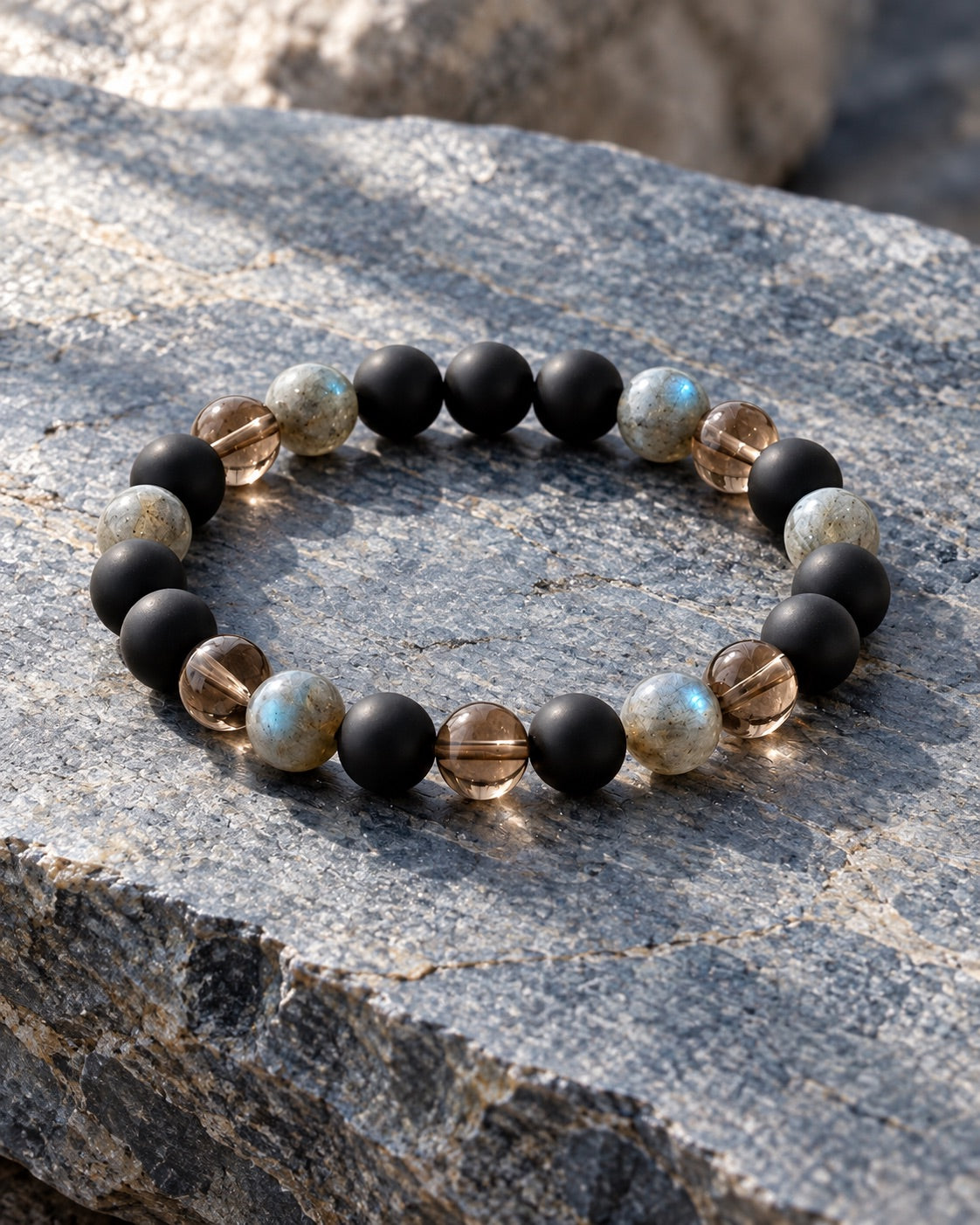
Labradorite was named for the Labrador coast of Canada, where it was found in the eighteenth century, and its shifting flash of blue, green and gold has a word of its own, labradorescence: light bouncing between microscopically thin layers inside the feldspar. Its role in the canon is the mystic’s shield: it is said to sharpen intuition while acting as a soft filter, so that impressions arrive without flooding you. It speaks to the Third Eye and the Crown, and people stepping into deeper intuitive work often choose it.
Breath carries most of its ritual: the stone rests at the brow, each exhale runs longer than the inhale, and a few quiet words about seeing clearly close it. People who read atmosphere keenly, who are easily swayed by others or who want insight without overstimulation often find it a good companion. Anyone feeling too open, restless, caught in looping thoughts, far from themselves or freshly grieving is better served by waiting, since labradorite can sharpen perception beyond comfort.
We share these associations as tradition, not as a promise of results.
Care
How to cleanse and care for labradorite
Best ways to cleanse it: Moonlight · Selenite plate · Sound
| Method | Can it bear it? | In our practice |
|---|---|---|
| A brief rinse | BrieflyA feldspar with cleavage: rinse briefly in lukewarm water and never soak it. | We skip itOur practice keeps water cleansing for a few named stones only. |
| A bed of salt | Yes | We skip itWe keep labradorite off salt. |
| Morning sun | BrieflyFeldspar dislikes heat; keep sun to a few minutes. | We skip itOur practice keeps labradorite out of the sun, which can dull its flash. |
| Moonlight | YesBy a window, for three to five hours only. | We use it |
| Smoke | Yes | Not usually |
| Sound | Yes | We use it |
| A selenite plate | Yes | We use it |
We use it: named for this stone in our canon. Not usually: safe for the stone, but not a method we name for it. We skip it: our practice keeps it away.
Pairings
What labradorite sits well with
From the KUSHA canon, the stones most often set beside it.
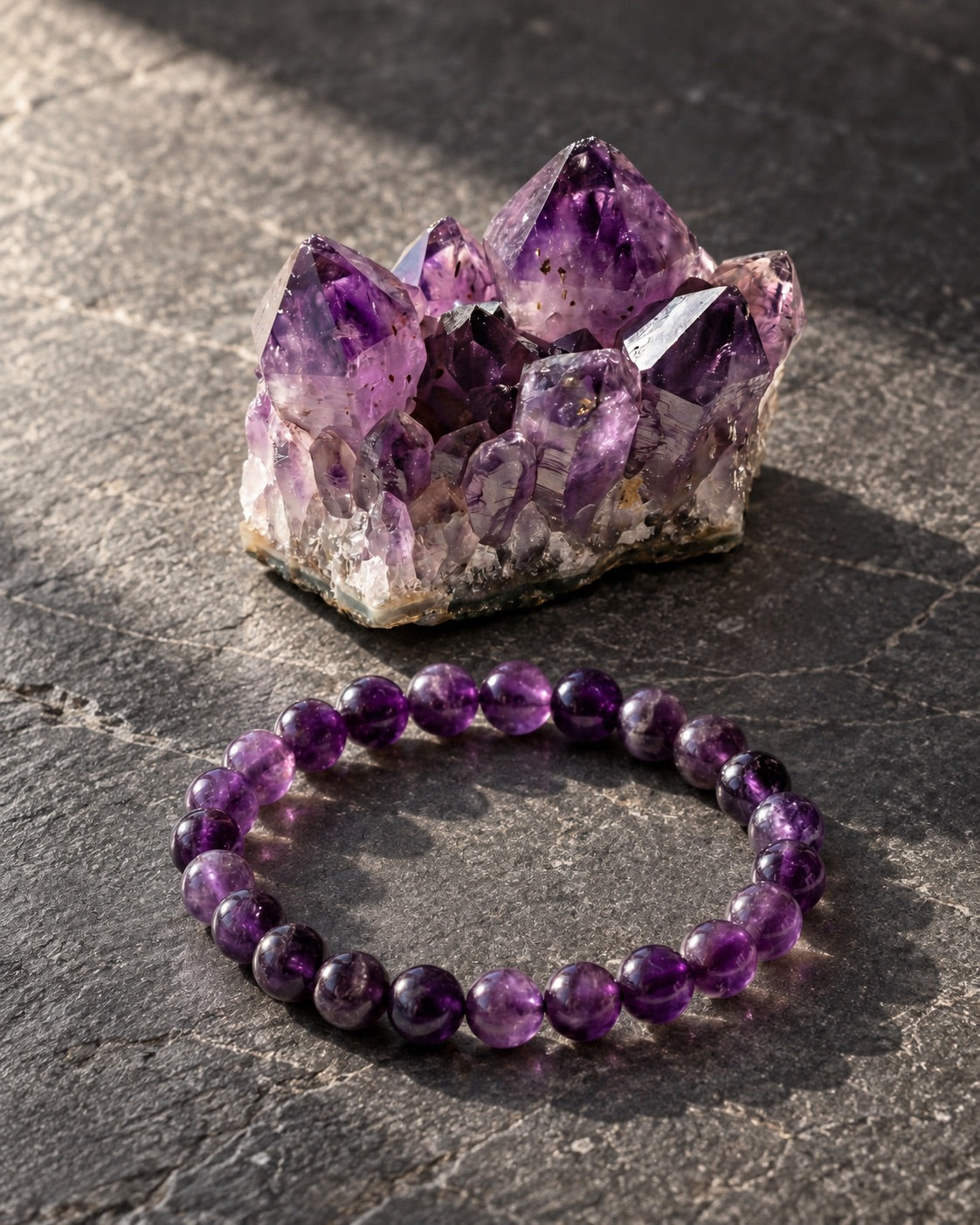
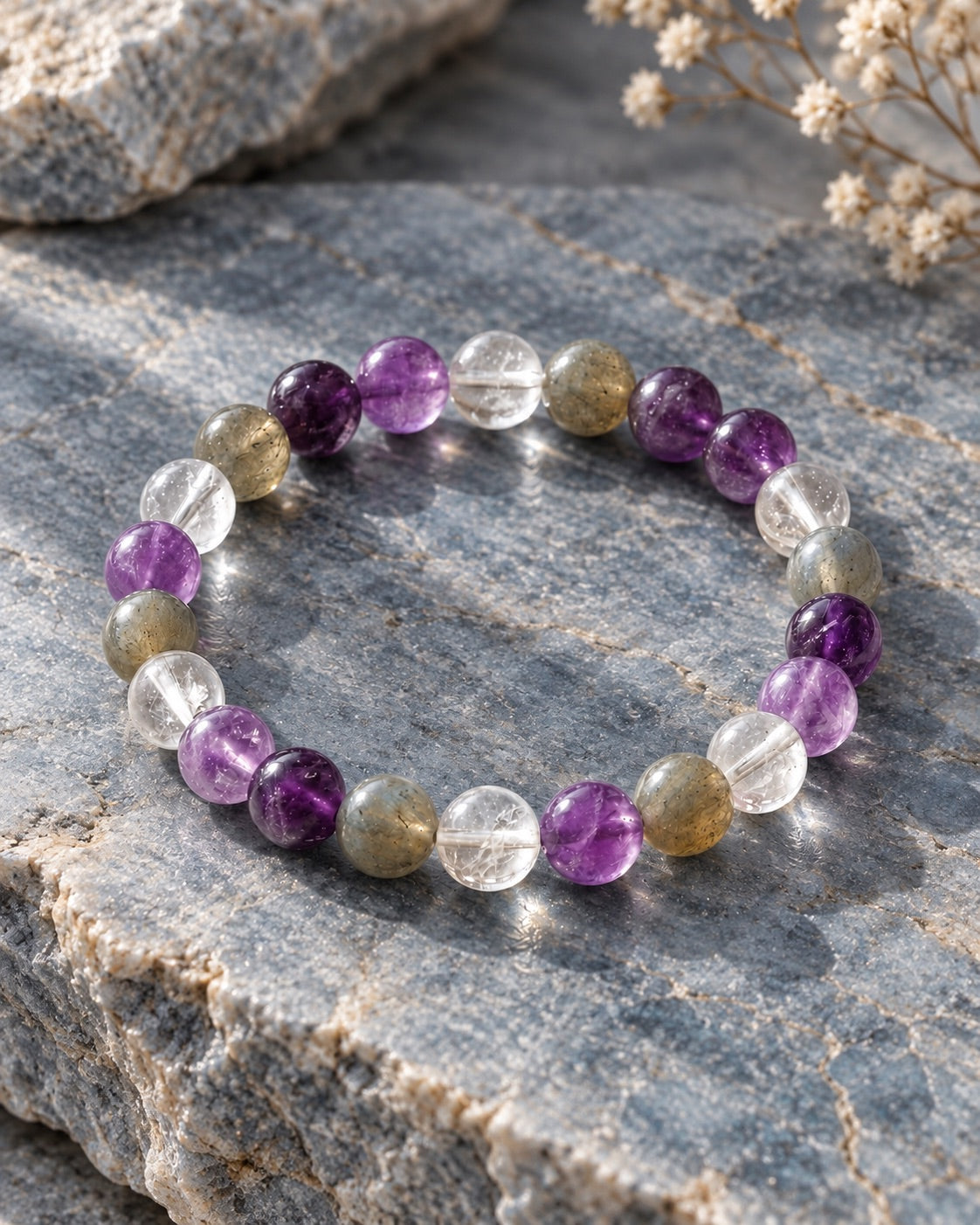
 Amethyst
 Smoky Quartz
 Selenite
In the KUSHA canon, selenite always goes with a grounding stone, so add one such as smoky quartz or black tourmaline when you set the two together.
Kept apart from moldavite. The KUSHA canon never pairs moldavite with a Crown stone: together they can open too much at once.
A note of care
Before you use it
Best once your practice is steady: set it aside in restless, tender or burnt-out weeks.
Real or fake
Is my labradorite real?
We sell labradorite as natural, and your lab certificate comes with your order.
- Iridescent glass and surface coatings can mimic the colour, but they shimmer from every angle at once.
- Real labradorite flashes only when light meets it at the right tilt, so turn it slowly and watch colour switch on and off in patches, often with straight edges.
- Between flashes the body should look grey to smoky, frequently threaded with dark needle-like inclusions.
Asked about labradorite
Labradorite, answered
Can labradorite go in water?
Not in our practice. Our practice keeps water cleansing for a few named stones only. The stone itself takes a brief rinse.
Can labradorite go in the sun?
Not in our practice. Our practice keeps labradorite out of the sun, which can dull its flash. The stone itself takes only a little sun.
Can labradorite be cleansed on salt?
Not in our practice. We keep labradorite off salt. Dry salt would not harm the stone itself.
How do you cleanse labradorite?
In our practice, the best ways to cleanse labradorite are moonlight, a selenite plate and sound.
What does labradorite mean?
Labradorite was named for the Labrador coast of Canada, where it was found in the eighteenth century, and its shifting flash of blue, green and gold has a word of its own, labradorescence: light bouncing between microscopically thin layers inside the feldspar. Its role in the canon is the mystic’s shield: it is said to sharpen intuition while acting as a soft filter, so that impressions arrive without flooding you. It speaks to the Third Eye and the Crown, and people stepping into deeper intuitive work often choose it.
Which chakra is labradorite linked with?
Labradorite is traditionally linked with the Third Eye and Crown chakras. In the KUSHA system, its element is air and its planets are Uranus and Neptune. We share these associations as tradition, not as a promise of results.
What does labradorite pair well with?
In the KUSHA system, labradorite sits well with amethyst, smoky quartz and selenite. We keep it apart from moldavite. The KUSHA canon never pairs moldavite with a Crown stone: together they can open too much at once. In the KUSHA canon, selenite always goes with a grounding stone, so add one such as smoky quartz or black tourmaline when you set the two together.
Is labradorite good for beginners?
Yes, with a little attention. Labradorite is a steady stone, easy to live with. Best once your practice is steady: set it aside in restless, tender or burnt-out weeks.
Still asking?
Ask the Atlas, or ask a person.
Written by the KUSHA Studio, Jaipur. Last updated 15 October 2026. Crystal associations come from tradition and our own practice, and Pranic Healing is a complementary practice. Nothing here is medical advice. Our products and services are not intended to diagnose, treat, cure or prevent any medical or psychological condition, and no outcome is promised. Please see a qualified professional about any health concern. Healing disclaimer