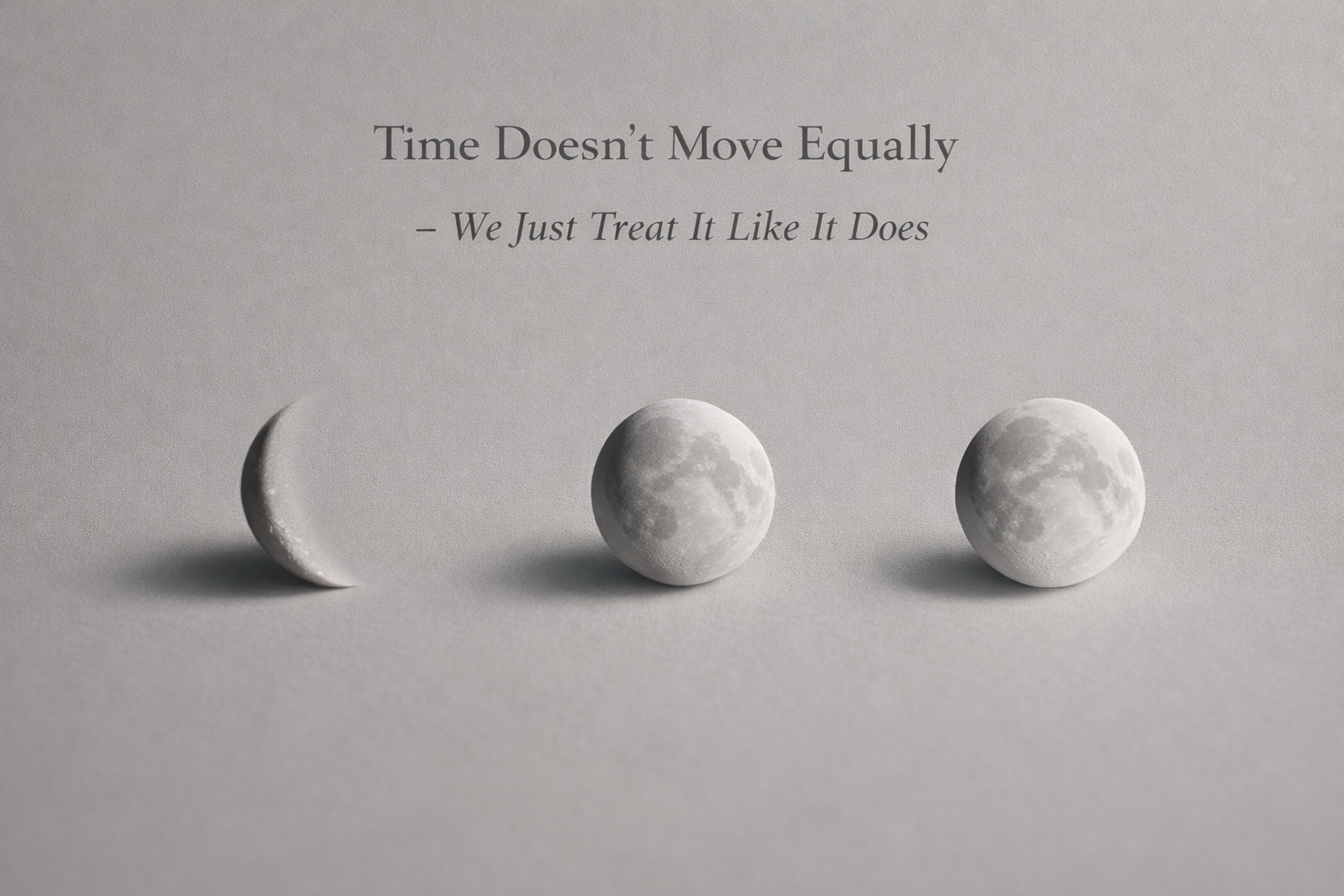
Time Doesn’t Move Equally - We Just Treat It Like It Does
Time is often spoken about as neutral — something that moves forward at a steady pace,
indifferent to what we are doing within it. But lived experience suggests otherwise. Some days feel
expansive and cooperative, while others feel dense and resistant. This difference is not
imagination. It is rhythm.
In Vedic systems, time has always been understood as qualitative, not just quantitative. Certain
days support initiation, others support consolidation, reflection, or release. The lunar cycle plays a
central role in this understanding, reflecting emotional readiness and energetic capacity.
A tithi calendar does not predict outcomes.
It offers orientation.
It helps explain why effort sometimes flows and sometimes feels delayed, even when intention
remains consistent.
When rhythm is respected, action becomes more intelligent. Decisions feel less forced, emotional
responses soften, and effort meets less resistance.
Time does not move equally.
But when we learn to listen to it, we move more wisely within it.